Dried daikon radish season
Radishes are at their most delicious at this time of year.
Dried daikon radish is also a preserved food that is made during this season.
Cut winter radishes into thin strips and dry them in the sun.
That alone makes the taste and texture completely different.
It is a handicraft that has been done as a matter of course since ancient times,
When you actually try it, you'll be amazed at how practical it is.
Just cut and dry
Making kiriboshi daikon is very simple.
Shred the radish with the skin on .
You can cut it as thick as you like, but the thinner you cut it, the faster it will dry .
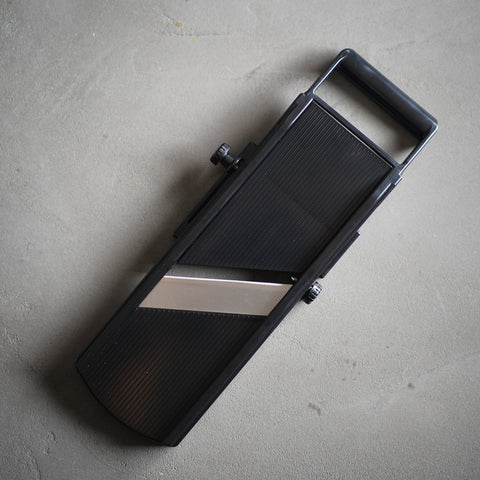
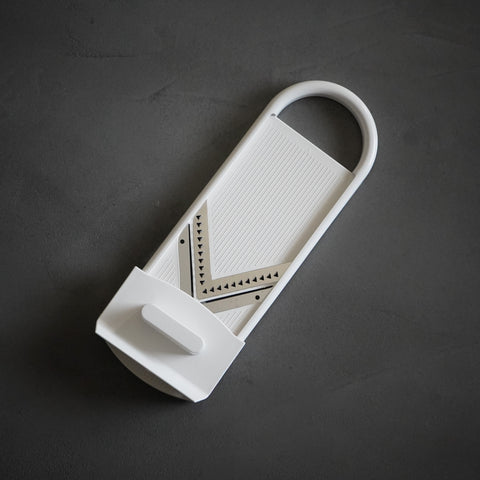
This time I used a slicer to make it evenly thick.
The cut radishes are left outside during the day to dry in the sun .
It is important to bring them in before sunset and to avoid exposing them to night dew .
If it absorbs night dew, moisture will return and it may not dry properly.
Repeat this process,
Drying thoroughly will prevent mold .
The key is to proceed slowly and keep an eye on the weather.
No special tools are required and there are no difficult steps.
Just cut and dry.
This alone turns radish into another food ingredient that can be preserved for a long time.
Cookware used

Kitchen slicer (3 types of julienne)
It comes with three different types of julienne blades, each with a different width.
This slicer is easy to use for preparing dried daikon radish, as you can choose the thickness to suit your dish.
Preservation wisdom passed down from the Edo period
It is said that kiriboshi daikon became widely produced as a preserved food during the Edo period.
In the days before refrigerators, this was a way to preserve the radishes harvested in winter and keep them fresh for longer.
The Owari region is known as a famous production area, and the sweetness and umami that come from drying it has been a staple on the dinner table every day.
It's not a special dish, but it's packed with wisdom that has been honed through everyday life.
Drying concentrates the nutrients

Drying radishes removes moisture and concentrates the nutrients.
Rich in dietary fiber and minerals,
Another characteristic of kiriboshi daikon is that it is a satisfying food even when eaten in small amounts.
The ingenuity for preservation
What's interesting is that the end result is ingredients that are good for the body.
Dried daikon radish is not just for simmered dishes
When I hear about kiriboshi daikon,
I think many people think of the classic stew made with carrots and chikuwa.
Of course, it's delicious too.
However, that's not all that's appealing about kiriboshi daikon radish.
The unique texture and flavor that comes from drying
Even when used without cooking, it still has a strong presence.
In fact, it goes well with salads.
Dried daikon radish and chrysanthemum salad

The texture and flavor of dried daikon radish,
A salad that combines the aroma of chrysanthemum, the gentle flavor of tofu, and the richness of salted kelp.
material
Crown chrysanthemum …… 180g
Dried daikon radish... a handful
Tofu …… 1 block
Salted kelp …… 20g
seasoning
Chicken stock powder …… 1 teaspoon
Soy sauce …… 1 teaspoon
1 teaspoon vinegar
1/2 teaspoon grated garlic
Sugar …… 1/2 teaspoon
Sesame oil …… 1 tablespoon
White sesame seeds …… 1 tablespoon
Preparation
Tofu <br data-end="2192" data-start="2189">If possible, drain the water.
This is to prevent water from coming out and diluting the flavor.
Dried daikon radish <br data-end="2245" data-start="2242">Soak in water and squeeze out the water.
Cut to your desired size.
Crown chrysanthemum <br data-end="2291" data-start="2288">Pick the leaves by hand, leaving them as large as possible in shape.
If you don't want to bother, you can cut it to the size you like.
Chop the remaining stems.
How to make it
1. Mix all the seasonings in a bowl
2. Add the dried daikon radish, chrysanthemum, tofu, and salted kelp.
3. Gently mix everything together and it's done